Robben Island
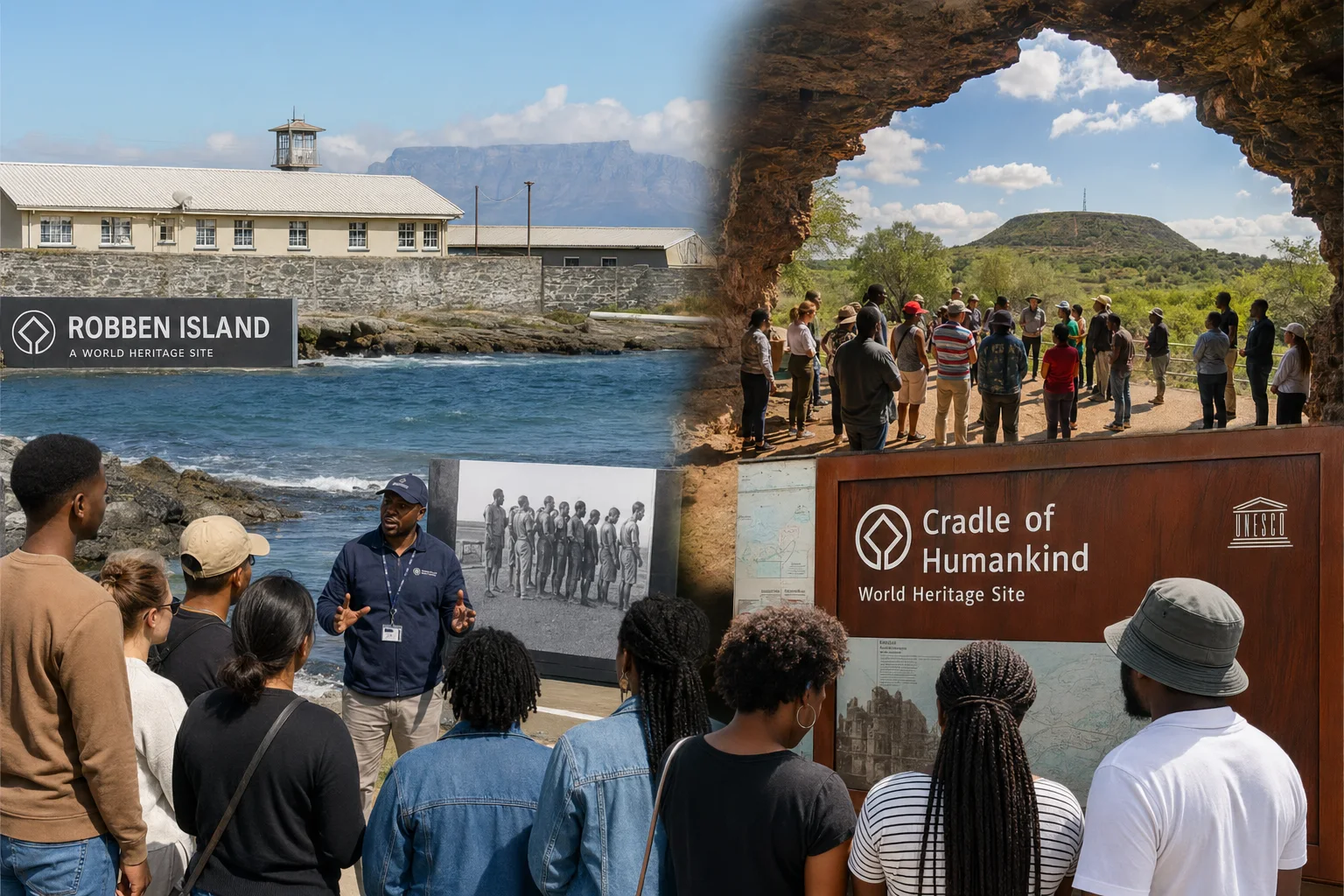
Today: Today, it serves as a museum and World Heritage Site, educating people about the past and teaching about hope and reconciliation.
Then and now: A place of imprisonment and suffering. A place of learning and remembrance.

4 landmarks · living history
South Africa is full of amazing stories and places to explore. Imagine visiting grand buildings that witnessed great events or ancient sites where early humans walked. These special landmarks help us learn about the country's diverse history and the many cultures that make it unique. Each monument is like a time machine, taking us to different chapters of South Africa's incredible journey.
Cultural Significance
South Africa's heritage sites tell us stories about its rich history, the fight for rights and equality, and its diverse cultures. These places help us remember the past, learn about resilience, and inspire a future of unity.
Today: Today, it serves as a museum and World Heritage Site, educating people about the past and teaching about hope and reconciliation.
Then and now: A place of imprisonment and suffering. A place of learning and remembrance.
Today: The Cradle helps us learn about our early relatives and is a symbol of our shared human beginnings.
Then and now: A natural preserve with hidden fossils. A protected area and learning center for human history.
Today: They stand for democracy and unity, showing how far South Africa has come on its journey.
Then and now: Built to symbolize the union of a country that was once divided. It serves as the official seat of the South African government and houses the President's offices.
Today: Today, it serves as a museum that showcases South African heritage and military artifacts.
Then and now: A fort for defense and administration. A museum for history and culture.
On the Map
This map shows important places in South Africa, helping kids see where history happened, like the places where leaders made history or ancient fossils were found. It aids in understanding and connecting with the past.