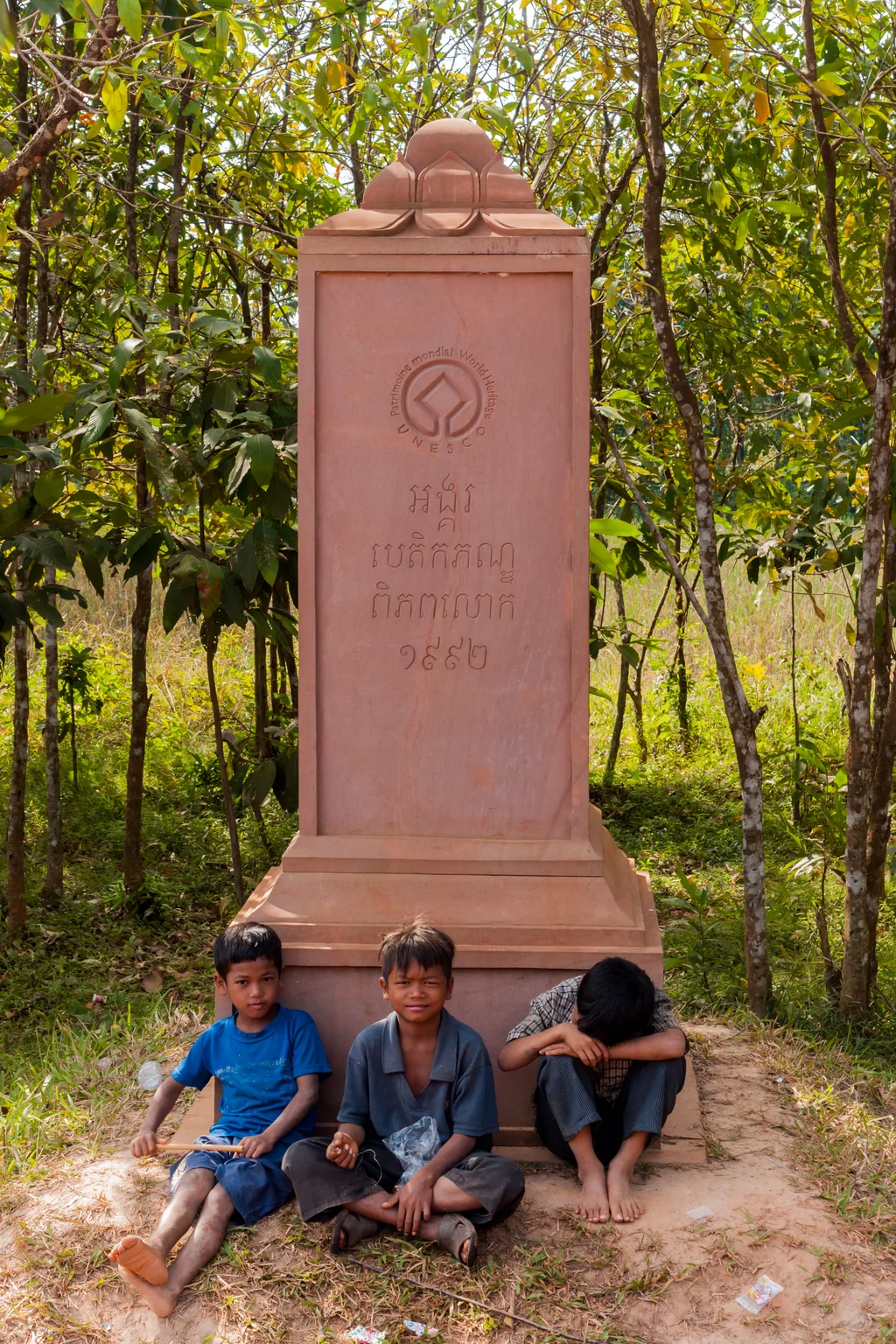
Banteay Srei
Siem Reap Province · 10th Century
It's known for its beautiful carvings in pink sandstone.


4 landmarks · living history
Discover Cambodia, a wonderful place filled with amazing old temples and colorful traditions. Imagine walking through Angkor Wat, one of the world's most famous and beautiful temples. Learn about the exciting stories from long ago and see how people built incredible structures without modern machines. Cambodia's rich history and lively culture make it a place full of wonder and surprise.
Siem Reap Province · 10th Century
It's known for its beautiful carvings in pink sandstone.
Cultural Significance
Cambodia's temples serve as magnificent examples of architecture and embody the country's rich history, religious practices, and artistic achievements, teaching us about the Khmer civilization's accomplishments.
Today: Angkor Wat is a symbol of Cambodia and is on the national flag.
Then and now: It was once a very important Hindu temple at the heart of an ancient city. Today, it's a famous UNESCO World Heritage Site with tourists from all over the world.

Today: It's known as a state temple symbolizing the Mahayana Buddhist king's reign.
Then and now: It served as an important place for worship and politics. Now, it's admired for its art and history.
Today: It's a beloved heritage site demonstrating unique architecture among the mountains.
Then and now: Long ago, it was a place for devotion way up in the mountains. These days, it's an important symbol of Cambodia's rich heritage.
Today: Today, it shows how time and nature affect great buildings.
Then and now: Once a busy place for learning and worship. Now, it's mostly left the way it was found, creating a beautiful scene.
Today: It is a well-kept example of Khmer art.
Then and now: A place for worship and showing art skills. People visit it to admire its stunning details.
On the Map
Cambodia is located in Southeast Asia. Many famous landmarks, such as Angkor Wat and Bayon Temple, are found in the Siem Reap Province, showcasing the area's historical richness.
Related-country comparisons will expand as regional coverage grows.